
Quick answer
Shrines are Shinto and usually have a torii gate. Temples are Buddhist and usually have a large gate, a main hall and Buddha statues. The fierce statues at temple gates are guardians, not demons.
Travelling around Japan, you’ll see Shinto shrines and Buddhist temples everywhere, often right next to each other. At first they blur together. Here’s how I learned to tell them apart.
The short version:
- Shrine → Shinto, look for a torii gate.
- Temple → Buddhist, look for a big gate, a main hall and Buddha statues.
- Fierce statues at temple gates are guardians, not demons.
- Both are usually surrounded by nature.
Shinto and Buddhism
- Shinto → Japan’s native religious tradition.
- Buddhism → came to Japan from outside, and grew into many Japanese schools and traditions.
The two became deeply connected over the centuries, and were formally separated during the Meiji period. Today they still coexist in daily life.
How to tell them apart
Shrine (Shinto)
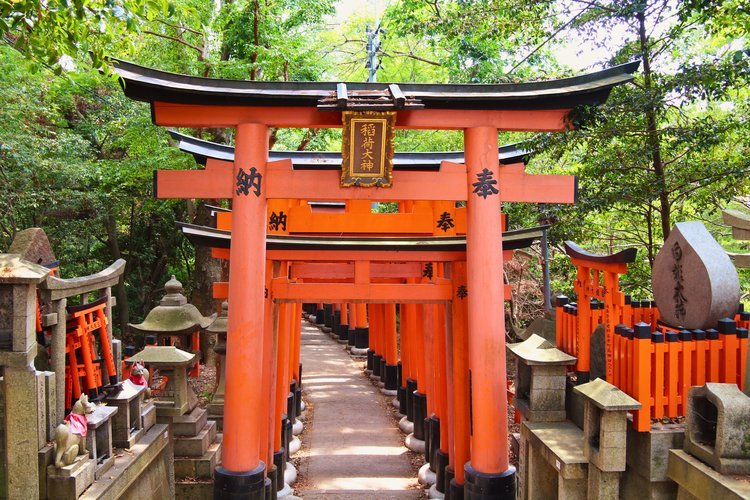
- A torii gate at the entrance, often red or orange.
- Shrine buildings with simple, natural design.
- Example from our trip → Fushimi Inari in Kyoto, with thousands of torii gates.
Temple (Buddhist)
- A large temple gate, sometimes with guardian statues.
- A main hall and often a pagoda.
- Buddha statues.
- Examples from our trip → Senso-ji in Tokyo, the Great Buddha in Kamakura, Todai-ji in Nara.
The scary statues aren’t demons
At some temple entrances, you’ll see fierce, frightening-looking statues. They’re guardian figures, like the Nio, traditionally there to protect the temple and its sacred space.

Built into nature
One thing I really liked: temples and shrines are often surrounded by:
- Trees and forests
- Gardens
- Water
- Rocks and plants
The buildings feel like part of the landscape, not placed on top of it.
A few basics when visiting
- Keep your voice down.
- Follow photo signs. Some halls don’t allow photos inside.
- Shoes off where there’s a step up into a building.
- Carry cash for entry fees and small offerings.
More in my etiquette guide.
Popular things worth knowing about
- Purification fountain (temizuya) → rinse your hands and mouth before entering. There’s usually a simple sign showing how.
- Omikuji → paper fortunes. If you get a bad one, tie it to the rack and leave it behind.
- Goshuin → handwritten temple and shrine stamps in a special book, a popular souvenir.
- Ema → small wooden plaques where people write wishes.
[…] Kyoto has both shrines and temples, often close together. Fushimi Inari is a Shinto shrine (hence the torii gates). Here’s how to tell them apart. […]