Quick answer
Expect 20,000 to 25,000 steps on a normal sightseeing day. Stations alone add a lot. Wear proper shoes, keep day one light, start early, and use vending machine breaks to reset.
Packing lists mention “comfortable shoes” in one line and move on. That undersells it. Walking isn’t a side note in Japan, it’s basically the main activity.
The short version:
- A normal sightseeing day → 20,000 to 25,000 steps.
- Our last day → close to 40,000.
- Stations add a big chunk on their own.
- If you don’t walk regularly, prepare before the trip.
Why it adds up so fast
You’ll often read that people in Japan walk 10,000 to 15,000 steps a day. That’s mostly a fixed daily commute. As a tourist, you’re covering new ground all day.
Here’s what “just take the train” really looks like:
- Walk from the hotel to the station.
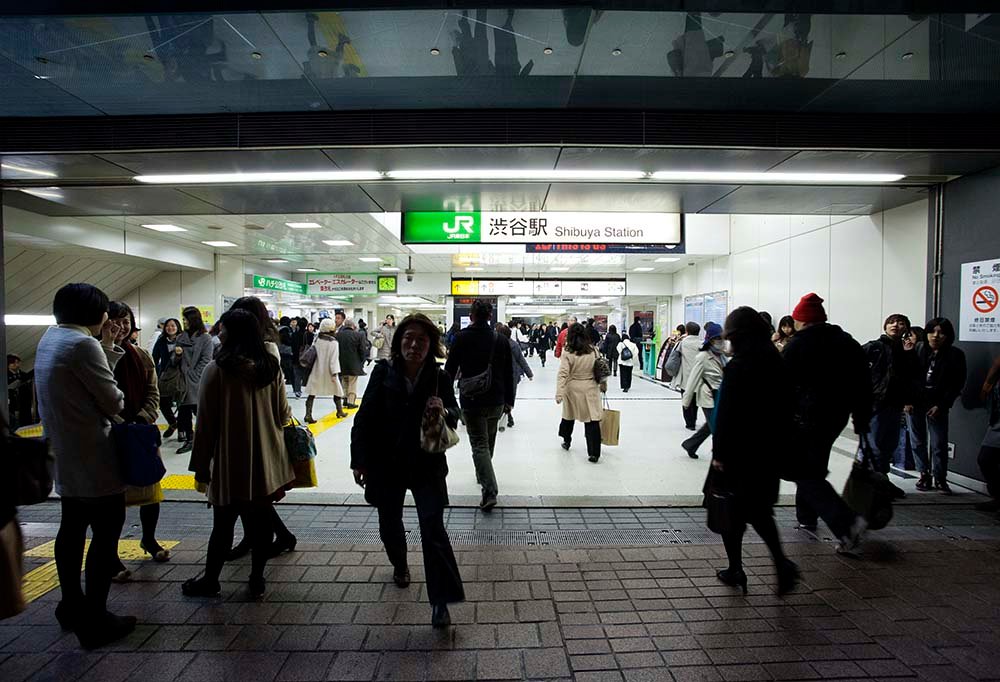
- Walk through the station to find your line.
- Walk to the right platform.
- Ride the train.
- Walk through the station again.
- Walk from the station to the actual place.
Big stations are also built in levels, with lines, shops and exits on different floors. Changing platforms at a big Tokyo station can take a while, and that’s before you’ve reached the street.
So when Google Maps says “easily reachable by train”, read it as “reachable, plus a lot of walking”.
What a real day looked like
- Tokyo → Shibuya, Harajuku, Cat Street, Shinjuku. Easily past 15,000 steps before dinner.
- Senso-ji and the Sumida River → none of it long, but it stacks.
- Kamakura and Enoshima → the Great Buddha, the coast, then Enoshima. A long day on your feet.
- Kyoto → so much of it is walking between places that are close individually, but add up.
Taxis are expensive compared with trains, so trains do most of the work, and your feet do the rest.
What actually helped
- Vending machine breaks. There’s one on almost every corner. A two-minute cold drink break resets you.
- Pocari Sweat → an electrolyte drink sold everywhere. On hot, sweaty days it worked better for me than plain water.
- Real food, not just bread. On days when vegetarian options were thin, I grabbed a smoothie, fruit or dried fruit instead of running on konbini bread.
- Good shoes, already broken in before the trip.
How to pace your days
- Day one → keep it light. Jet lag is real. Settle in and sleep early.
- From day two → start early. You get more hours before fatigue kicks in, and you can head back earlier in the evening.
- Don’t stack your most walking-heavy day right after a long travel day.
- Around day three or four, your legs start complaining. Plan one slower day.
If you’re travelling with kids, older parents or anyone with joint issues, talk about this honestly before booking. Japan is safe, clean and easy to navigate, but it’s closer to a walking tour with great trains in between than a relaxing holiday.